

Introduction
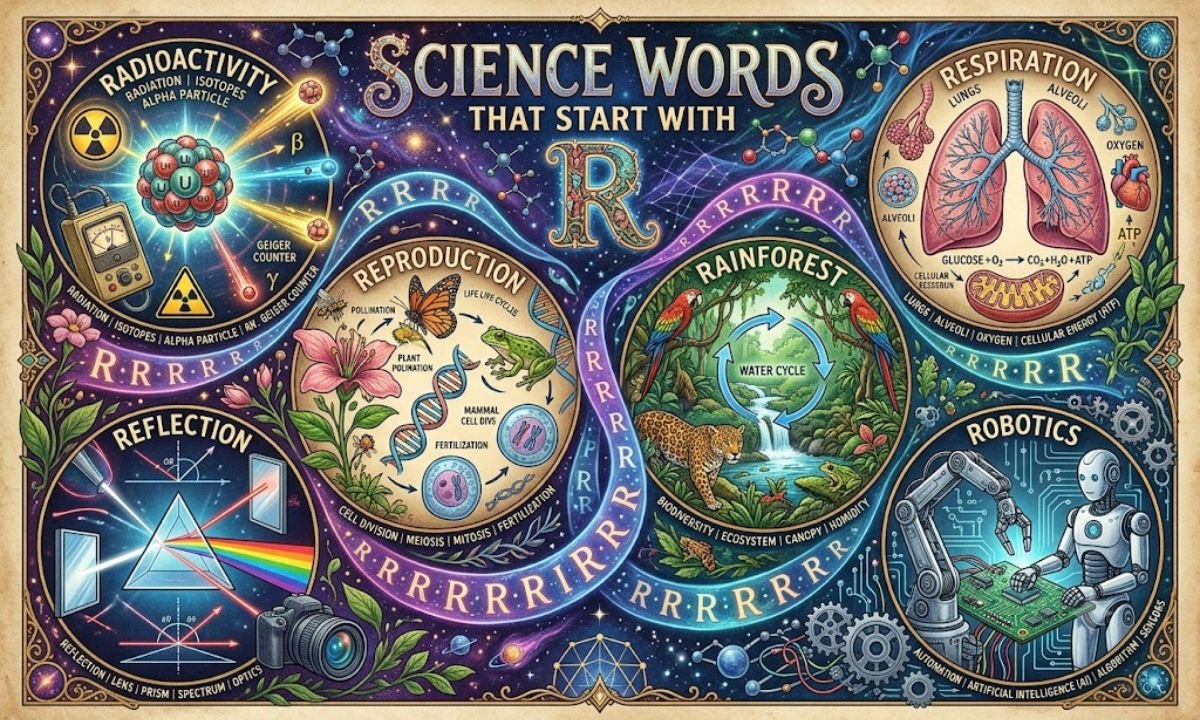
Science has its own language, and the letter R contributes some of its most powerful vocabulary. From the energy that powers X-ray machines to the process that keeps every living cell functioning, R-based science words describe forces, reactions, and systems that shape the world around us. Whether you’re a student preparing for an exam, a teacher building a lesson plan, or simply someone curious about how science explains everyday phenomena, this guide breaks down the most important science words that start with R in simple, clear language.
This article covers biology, physics, chemistry, and technology terms, explains what each word means, and shows how these concepts connect to real life. Let’s dive into the fascinating world of “R” science vocabulary.
Why Science Words Starting With R Matter
R-words appear across nearly every scientific field. They describe:
- Processes inside living cells (like reproduction and respiration)
- Forces and energy in physics (like radiation and refraction)
- Chemical changes (like reaction and resistance)
- Modern technology (like robots and radiocarbon dating)
- Environmental solutions (like renewable energy)
Understanding these terms builds stronger scientific literacy, helps with exam readiness, and makes it easier to follow news and research about health, energy, and technology.
Complete List of Science Words That Start With R
Here is a quick-reference table before we explore each term in detail.
| Word | Field | Simple Meaning |
| Radiation | Physics | Energy traveling as waves or particles |
| Reaction | Chemistry | A process where substances change into new ones |
| Radius | Math/Physics | Distance from the center of a circle to its edge |
| Refraction | Physics | Bending of light as it passes between materials |
| Radiobiology | Biology | Study of radiation’s effect on living things |
| Replication | Biology | DNA copying itself before cell division |
| Receptor | Biology | A cell structure that detects signals |
| Respiration | Biology | Process of releasing energy from food |
| Resistance | Physics | Opposition to the flow of electric current |
| Robot | Technology | A programmable machine that performs tasks |
| Radiocarbon Dating | Earth Science | Method to determine the age of ancient materials |
| Rheology | Physics/Chemistry | Study of how matter flows or deforms |
| Reproduction | Biology | Process by which organisms create offspring |
| Regulation | Biology | Control of internal processes to maintain balance |
| Renewable Energy | Environmental Science | Energy from sources that naturally replenish |
Now, let’s look at each term more closely.
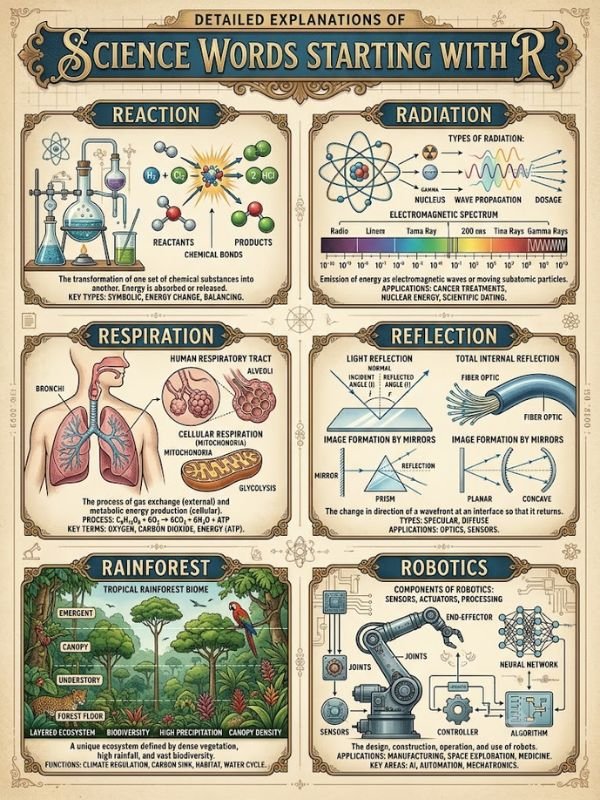
Detailed Explanations of Science Words Starting With R
Radiation
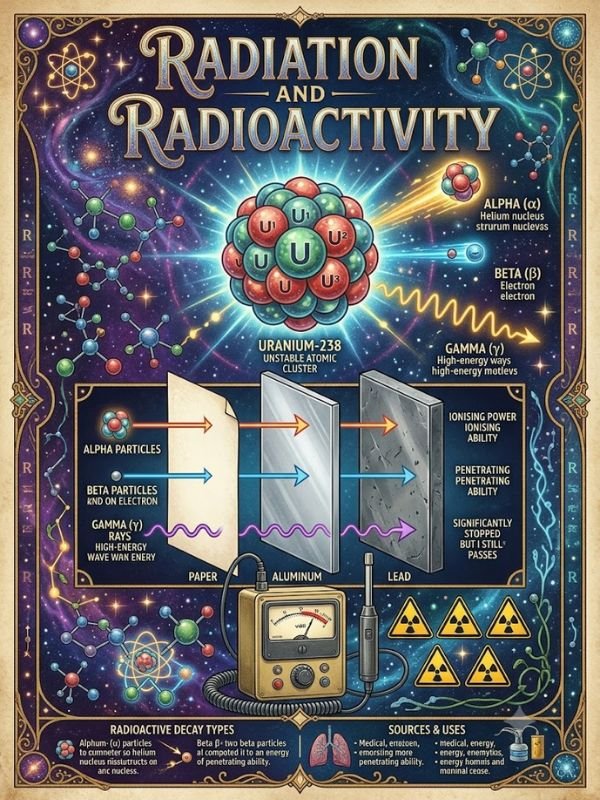
Radiation is energy that travels through space or matter in the form of waves or particles. It exists in many forms, including light, heat, X-rays, and gamma rays. Radiation plays a major role in medical imaging, cancer treatment, and even the natural warmth we feel from the sun.
Reaction
A reaction, particularly a chemical reaction, occurs when substances combine or break apart to form new products. Reactions release or absorb energy and are the foundation of everything from digestion to industrial manufacturing.
Radius
In geometry and physics, the radius is the distance from the center of a circle or sphere to its outer edge. This concept appears in calculations involving orbits, wheels, and atomic structures.
Refraction
Refraction describes how light bends when it passes from one medium into another, such as from air into water. This bending effect explains why a straw looks bent when placed in a glass of water and is essential to understanding lenses and eyeglasses.
Radiobiology
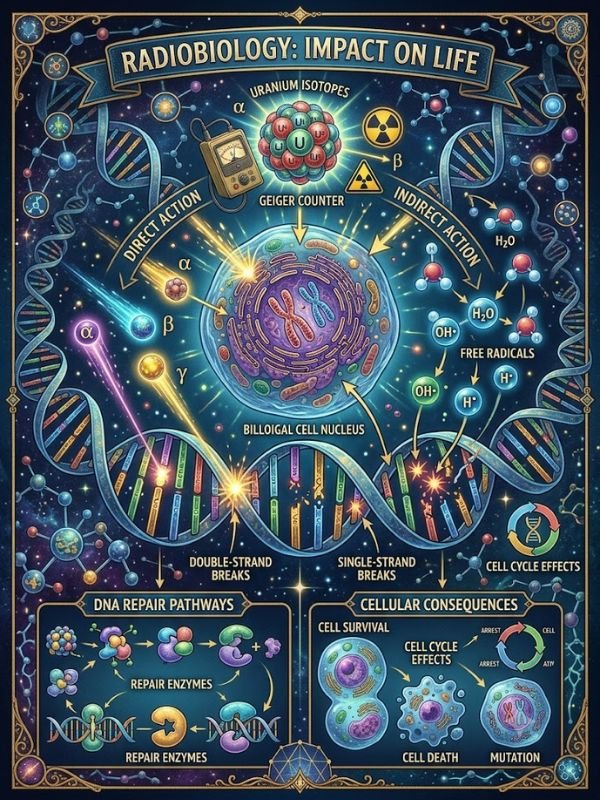
Radiobiology is the branch of science that studies how radiation affects living organisms. This field is critical for developing safe radiation therapies and understanding long-term exposure risks.
Replication
Replication is the biological process where a DNA molecule produces an exact copy of itself. This happens before a cell divides, ensuring that each new cell receives a complete set of genetic instructions.
Receptor
A receptor is a specialized structure, often a protein, that detects and responds to specific signals such as hormones, light, or chemicals. Receptors allow cells to communicate and react to their environment.
Respiration
Respiration is the process by which living organisms convert food into usable energy, typically using oxygen. This includes both breathing (external respiration) and the cellular process of energy release (cellular respiration).
Resistance
In physics, resistance refers to the opposition a material offers to the flow of electric current. Materials with high resistance, like rubber, are used as insulators, while low-resistance materials, like copper, are used as conductors.
Robot
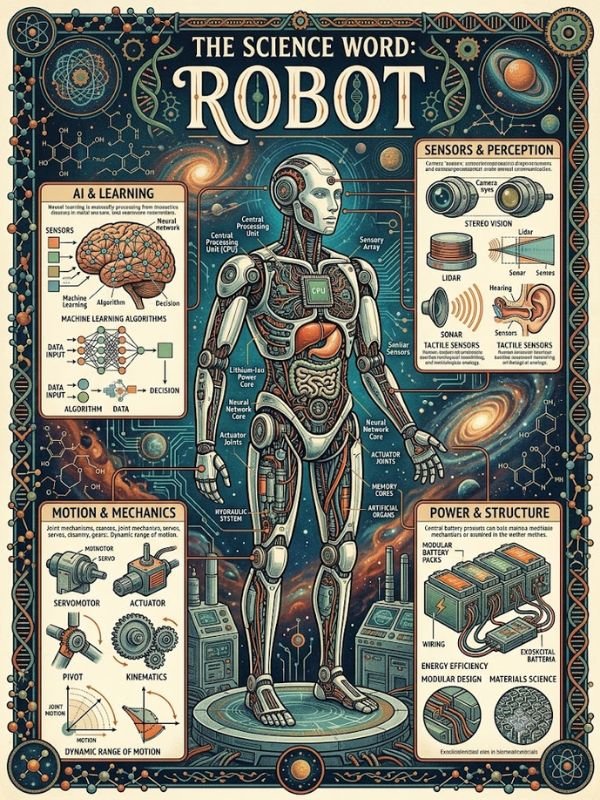
A robot is a programmable machine capable of performing tasks automatically, often replacing or assisting human labor. Robots are widely used in manufacturing, medicine, exploration, and household applications.
Radiocarbon Dating
Radiocarbon dating is a scientific technique used to estimate the age of organic materials by measuring the decay of carbon-14 isotopes. This method is widely used in archaeology and geology to date fossils and artifacts.
Rheology
Rheology is the study of how matter flows and deforms under stress, especially materials that don’t behave like typical solids or liquids, such as gels, pastes, and molten substances. This field is important in manufacturing food, cosmetics, and plastics.
Reproduction
Reproduction is the biological process through which organisms produce offspring, ensuring the continuation of a species. It occurs in two main forms:
- Sexual reproduction – involves two parents and genetic mixing
- Asexual reproduction – involves a single parent producing genetically identical offspring
Regulation
Regulation, in a biological sense, refers to the control mechanisms organisms use to maintain internal stability, such as body temperature, blood sugar, or hormone levels. This concept is closely tied to homeostasis.
Renewable Energy
Renewable energy comes from sources that naturally replenish, such as solar, wind, hydro, and geothermal power. Unlike fossil fuels, these sources produce lower emissions and support long-term environmental sustainability.
R Science Words by Category
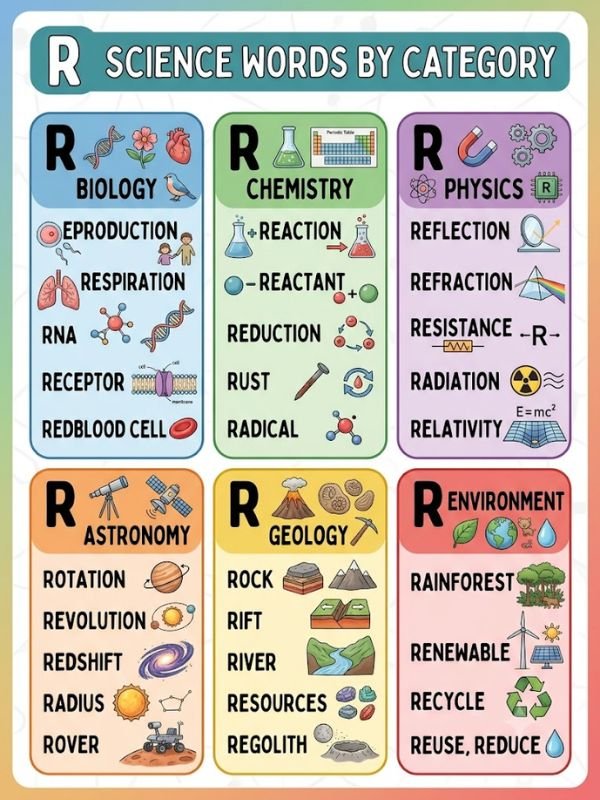
To make learning easier, here’s a categorized breakdown:
Physics & Chemistry
- Radiation
- Reaction
- Radius
- Refraction
- Resistance
- Rheology
Biology
- Radiobiology
- Replication
- Receptor
- Respiration
- Reproduction
- Regulation
Technology & Earth Science
- Robot
- Radiocarbon Dating
- Renewable Energy
Why Learning These Terms Is Useful
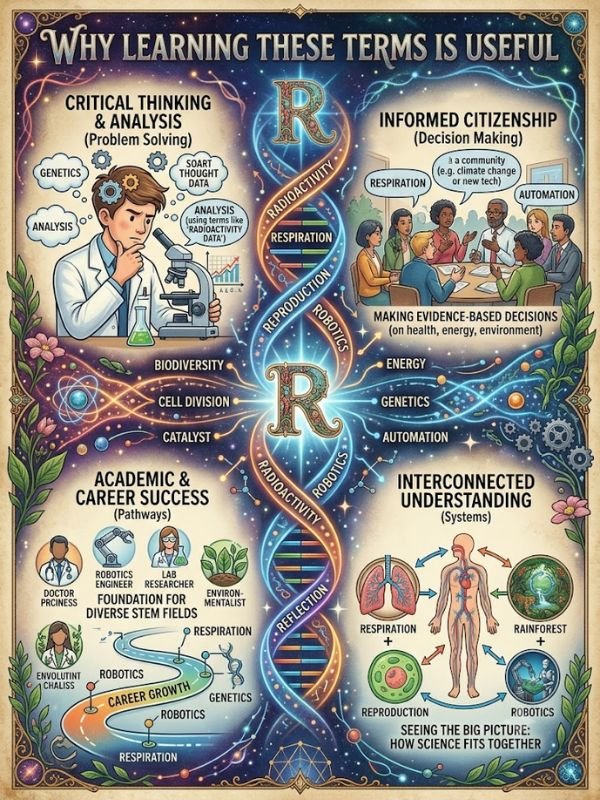
Understanding R science words isn’t just academic. These concepts show up in:
- Healthcare – radiation therapy, respiration monitoring, receptor-targeted medicine
- Environment – renewable energy, radiocarbon dating of climate samples
- Technology – robotics, resistance in circuits
- Education – biology, chemistry, and physics curriculums at every level
Building familiarity with this vocabulary strengthens comprehension across science subjects and makes it easier to follow scientific news, research papers, and classroom material.
Final Words
Science words that start with R cover an incredible range of ideas, from the invisible energy of radiation to the life-sustaining process of respiration and the forward-looking promise of renewable energy. These terms aren’t isolated facts; they connect biology, chemistry, physics, and technology into a larger picture of how the world works. Whether you’re studying for a test or simply expanding your knowledge, mastering this list gives you a stronger foundation in scientific literacy and a clearer understanding of the language shaping modern discovery.
Frequently Asked Questions
What are some common science words that start with R?
Common examples include radiation, reaction, refraction, respiration, resistance, and reproduction.
Is radiation always harmful?
No, radiation includes both harmful forms, like excessive X-rays, and harmless forms, like natural sunlight and radio waves.
What is the difference between reaction and replication?
A reaction involves substances chemically changing into new products, while replication specifically refers to DNA copying itself.
Why is renewable energy considered a science term?
Renewable energy describes natural, replenishable power sources studied in environmental science and physics, making it a key scientific concept.
How does radiocarbon dating work?
It measures the decay rate of carbon-14 in organic materials to estimate their age accurately.
Are these R science words useful for students only?
No, they’re valuable for students, educators, healthcare professionals, and anyone interested in science, technology, or the environment.

About MeaningsRoot.com
At MeaningsRoot, we make words easy to understand. Our mission is to explain meanings, slang, phrases, and language concepts in simple, accurate, and reader-friendly articles that help you learn with confidence.