
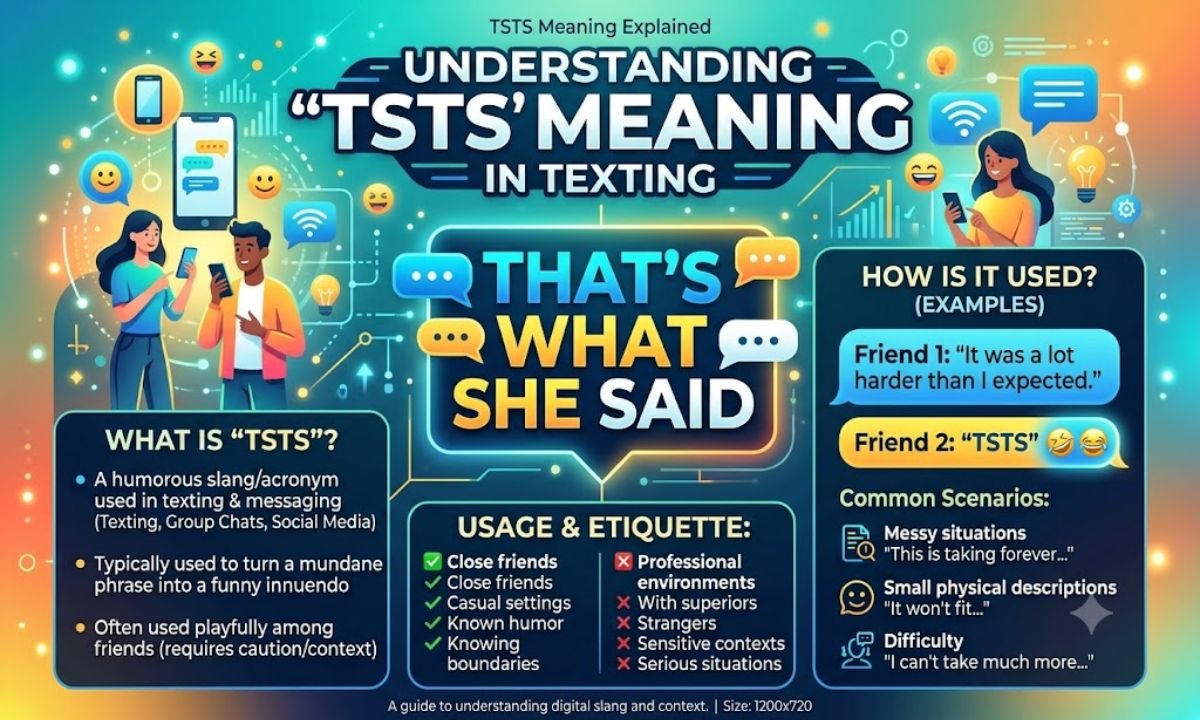

If you’ve seen “TSTS” pop up in a text, DM, or comment section and had no idea what it meant, you’re definitely not alone. This little four-letter combo has been showing up across WhatsApp, Instagram, TikTok, and group chats, leaving a lot of people scratching their heads. Because texting slang moves fast and changes meaning based on who’s using it, TSTS can feel confusing at first glance.
This guide breaks down everything you need to know — what TSTS means, how it’s used by guys and girls differently, when it’s appropriate, and how to reply when someone sends it to you.
What Does TSTS Mean in Text?
At its core, TSTS is a texting abbreviation with more than one accepted meaning, and the right one usually depends on context and tone.
The most common interpretations include:
- “Tsk Tsk” – a written version of the clicking sound people make with their tongue to show mild disapproval, disappointment, or playful judgment.
- “Too Shy To Say” – used when someone feels awkward admitting something, often in flirty or emotional conversations.
- “That’s So True, Seriously” – used to strongly agree with something someone just said.
- “Too Stressed To Speak” – a way of saying you’re emotionally overwhelmed and don’t have the energy to respond properly.
Because it doesn’t have one fixed, dictionary-approved definition, TSTS works more like an emoji than a word — its meaning shifts depending on the conversation around it.
Tsts Meaning From a Guy
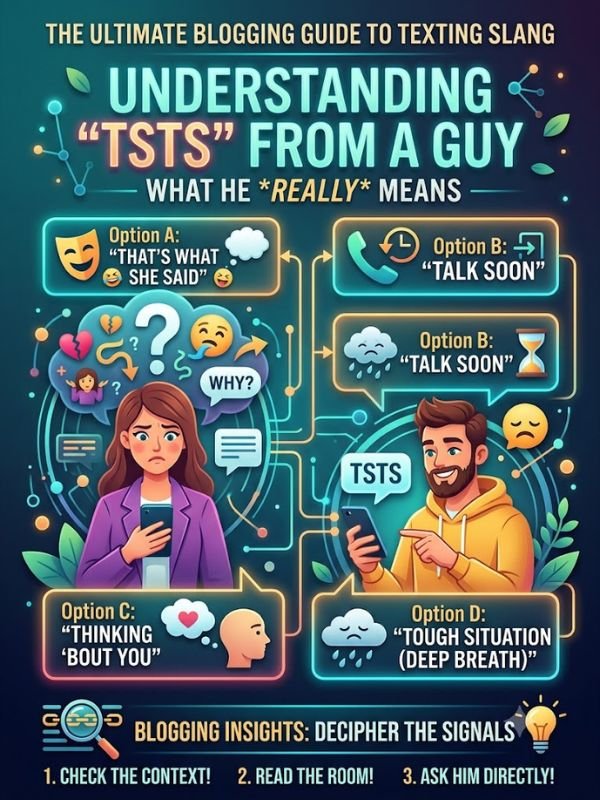
When a guy sends TSTS, it’s typically light teasing or gentle disapproval — similar to saying “smh” but softer and more playful. It can also signal shyness, especially if he’s dodging a direct question about feelings or attraction. In flirty exchanges, a guy texting TSTS often means he’s avoiding a straightforward answer on purpose, letting the other person guess what he really means.
Different Meanings of TSTS Explained
Since TSTS carries multiple possible meanings, it helps to see them laid out side by side.
| Meaning | Tone | Typical Use Case |
| Tsk Tsk (disapproval sound) | Playful or mildly critical | Reacting to a friend’s mistake or bad decision |
| Too Shy To Say | Shy, flirty | Avoiding a direct answer about feelings |
| That’s So True, Seriously | Agreement, enthusiastic | Backing up someone’s opinion or statement |
| Too Stressed To Speak | Overwhelmed, tired | Explaining why you’re not replying properly |
Because the abbreviation isn’t standardized, the safest approach is always to read the full conversation before assuming which meaning applies.
TSTS Meaning in Text From a Girl
When girls use TSTS, it often leans toward the “Too Shy To Say” or “tsk tsk” meanings. It’s commonly used in playful teasing between friends, or as a soft, coy response when someone asks a personal question she’s not ready to answer directly. In many cases, it’s paired with emojis or laughing reactions to keep the tone light rather than serious.
How to Identify the Correct Meaning of TSTS
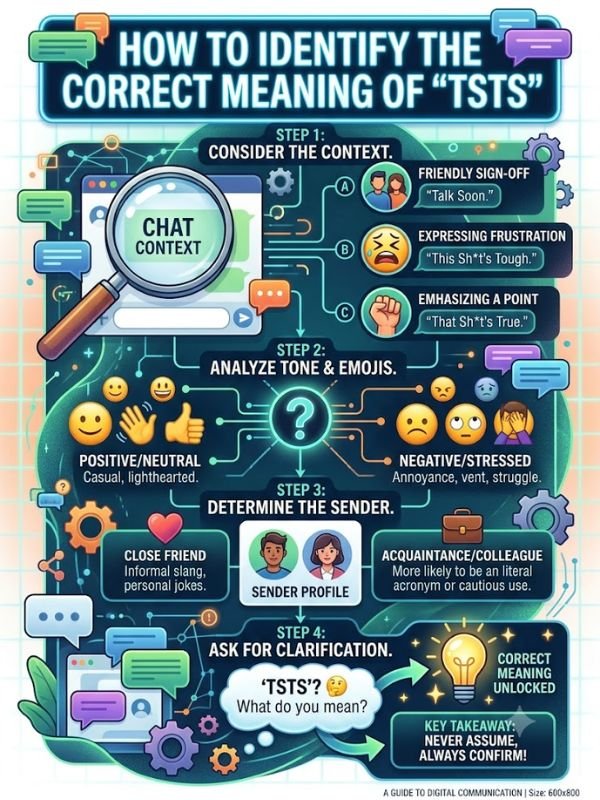
Figuring out which version of TSTS someone means isn’t hard once you know what to look for. Here’s a simple process:
- Read the message before and after – TSTS rarely appears in isolation; the surrounding text usually gives away the intended meaning.
- Check the relationship – close friends often use it as a joke, while a crush or romantic interest may use it to dodge a question.
- Look at punctuation and emojis – a laughing emoji suggests teasing, while a plain “tsts.” with no emoji might hint at genuine disappointment.
- Consider the platform – TikTok comments and gaming chats tend to use it more sarcastically than private one-on-one texts.
- Notice repetition – seeing “ts ts ts ts” repeated multiple times usually signals exaggerated judgment or a meme-style reaction rather than a sincere message.
Examples of TSTS in Text Conversations
Seeing TSTS used in real conversations makes the meaning much clearer.
- Disapproval example:
Friend: “I forgot to study again.”
You: “TSTS, you never learn 😂” - Shy/flirty example:
Crush: “Do you like me?”
You: “TSTS 😳” - Agreement example:
Friend: “That show’s ending was so unfair.”
You: “TSTS, I know right?” - Overwhelmed example:
Friend: “You okay? You’ve been quiet.”
You: “TSTS, work has been a lot lately.”
Tsts Meaning Urban Dictionary
On slang reference sites, TSTS has been defined in a few informal ways, including as a stand-in for the “tsk tsk” sound of disapproval and, in some entries, as a rougher slang expression tied to Gen Z texting culture. Because crowd-sourced slang definitions can vary wildly from one entry to the next, it’s best to treat these listings as general references rather than a fixed rulebook.
When to Use TSTS in Texting
TSTS fits naturally into casual, low-stakes conversations. It works well when you want to:
- Playfully call out a friend’s mistake without sounding harsh
- Show quick agreement with an opinion someone shared
- Avoid directly answering an awkward or personal question
- Add a lighthearted, sarcastic tone to a message
When NOT to Use TSTS
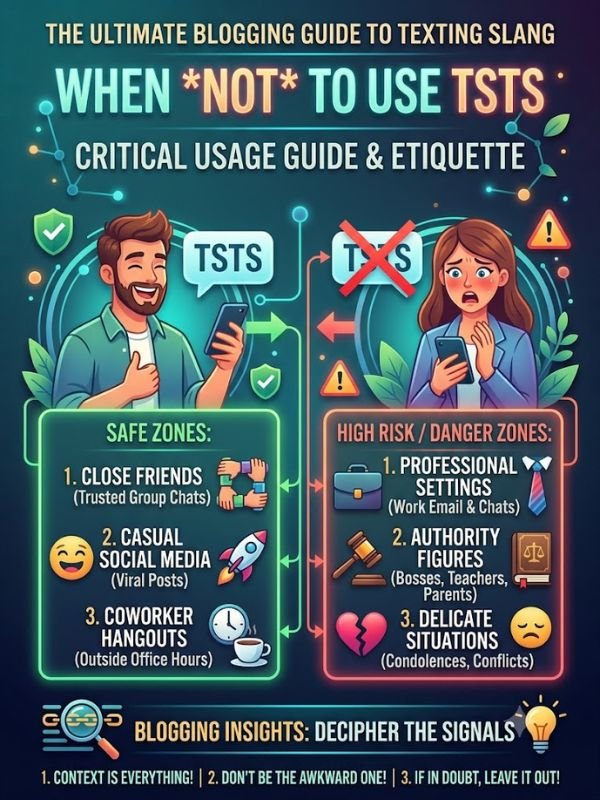
There are situations where TSTS simply doesn’t belong. Avoid using it:
- In professional emails, workplace chats, or messages to a boss or client
- When discussing serious topics like health, grief, or a genuine problem someone is facing
- With people who aren’t familiar with texting slang, since it can come across as confusing or dismissive
- In formal writing, essays, or official communication
How to Respond to TSTS in Text
If someone sends you TSTS, your reply should match the tone it was sent in.
| If TSTS Seems Like… | Good Response |
| Playful teasing | Laugh it off or tease back |
| Genuine shyness | Reassure them or gently ask a follow-up question |
| Agreement | Continue the conversation naturally |
| Stress or overwhelm | Ask if they’re okay and offer support |
When in doubt, a simple “haha what do you mean by that?” is a safe way to clarify without making things awkward.
Common Misunderstandings About TSTS
A few myths about TSTS keep circulating, so it’s worth clearing them up:
- Myth: TSTS is always rude. In reality, it’s usually playful rather than genuinely hurtful.
- Myth: It has one official meaning. TSTS is context-dependent slang, not a fixed term with a single dictionary definition.
- Myth: It’s appropriate everywhere. It’s casual slang best kept out of formal or professional spaces.
- Myth: Everyone uses it the same way. Meaning can shift based on age group, platform, and personal texting habits.
TSTS vs Other Similar Slang Terms
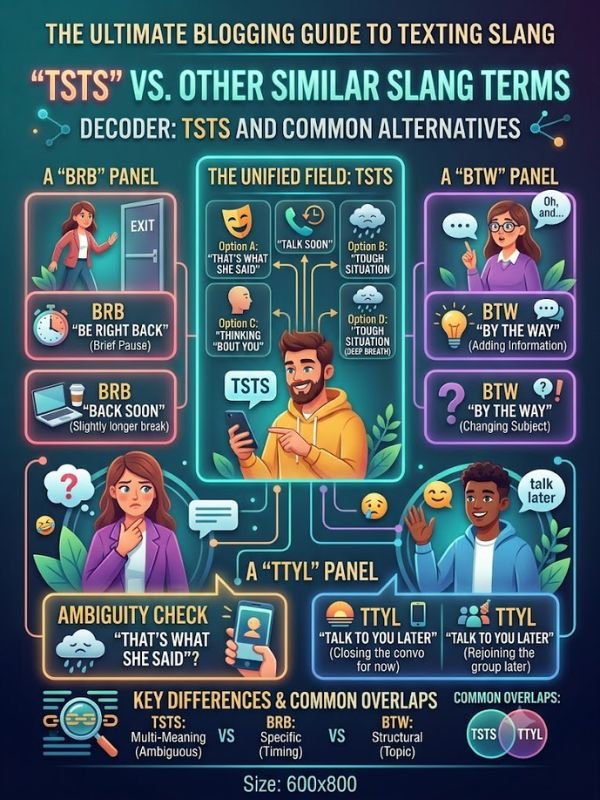
Comparing TSTS with similar abbreviations helps highlight what makes it unique.
| Term | Meaning | How It Differs From TSTS |
| SMH | “Shaking My Head” | More critical and less playful than TSTS |
| TS | Shortened disapproval or emphasis | Blunter and stronger in tone |
| WYS | “Watch Your Step” or a casual greeting, depending on region | Used more as a warning or check-in, not disapproval |
| TBTS | “Throwback to Something” | Refers to nostalgia, unrelated to reaction or judgment |
Conclusion
TSTS is a flexible piece of modern texting slang that can mean anything from a playful “tsk tsk” to shy hesitation, strong agreement, or feeling overwhelmed. The exact meaning depends heavily on who’s texting, the tone of the conversation, and the platform it’s used on. Once you get comfortable reading context clues, decoding TSTS becomes second nature — and you’ll be able to use it (or respond to it) with confidence in your own conversations.
Frequently Asked Questions
What does TSTS mean in a text message?
TSTS is texting slang that can mean “tsk tsk” (disapproval), “Too Shy To Say,” or “That’s So True, Seriously,” depending on context.
Is TSTS a bad word?
No, TSTS isn’t offensive — it’s casual slang, usually playful or teasing rather than harmful.
Can TSTS mean something flirty?
Yes, when used as “Too Shy To Say,” TSTS often signals shyness or hesitation in romantic conversations.
Where did TSTS come from?
Its exact origin isn’t clearly documented, but it likely evolved organically from casual online texting culture, similar to terms like LOL or BRB.
Should I use TSTS in professional messages?
No, TSTS should be avoided in work emails or formal communication since it’s informal slang.

About MeaningsRoot.com
At MeaningsRoot, we make words easy to understand. Our mission is to explain meanings, slang, phrases, and language concepts in simple, accurate, and reader-friendly articles that help you learn with confidence.