

If you’ve been scrolling through your DMs, Snapchat streaks, or group chats and spotted the letters “LLY,” you’re not alone in wondering what it means. This small acronym pops up everywhere in casual texting, and its meaning can shift slightly depending on who sends it and where. This guide breaks down everything you need to know — from its most common meaning to its rarer technical uses — so you never have to guess again.
What Does LLY Meaning in Text & Chat?
In most everyday texting and chat conversations, LLY stands for “Love You Lots.” It’s a warm, affectionate sign-off used between friends, family members, or romantic partners to express care without writing out a full sentence.
It’s the kind of phrase you’d drop at the end of a conversation, right before logging off, or as a quick reply to something sweet someone said. Think of it as sitting somewhere between the casual “LY” (Love You) and the more intense “ILY” (I Love You) — affectionate, but not overly serious.
You’ll most often see LLY used in:
- Text messages between close friends
- Snapchat captions or chat replies
- Instagram DMs and comments
- TikTok comment sections
- WhatsApp sign-offs at the end of a chat
The core idea stays consistent across platforms: it’s a short, sincere way to say you care.
LLY Meaning From a Girl in Text
When a girl sends “LLY” in a text, it usually carries the same warm, affectionate meaning — “Love You Lots.” Context matters a lot here, though:
- From a friend: It’s platonic warmth, similar to saying “you mean a lot to me.”
- From a romantic interest or partner: It can carry a softer, more intimate undertone, hinting at deeper feelings without saying “I love you” outright.
- In a group chat: It’s often just a friendly, low-stakes way to end a conversation on a positive note.
Because LLY is less intense than “ILY,” some people use it as a gentler way to test emotional waters in the early stages of dating — affectionate enough to mean something, casual enough not to feel too heavy.
Full Form, Stands For & Short Meaning of LLY
LLY doesn’t have one single official “dictionary” definition — like most internet slang, its meaning depends on context. Here’s a quick breakdown of the most common interpretations:
| Full Form | Common Context | Tone |
| Love You Lots | Texting, Snapchat, Instagram | Affectionate, casual |
| Literally Love You | Emotional or emphatic texting | Sincere, expressive |
| Love You Lots too | Reply to LY or ILY | Warm, reciprocal |
| Licking Love You (older/rare) | Old internet forums | Playful, mostly outdated |
The most widely accepted and currently trending meaning is “Love You Lots.” The “Literally Love You” interpretation shows up occasionally, especially when someone is emphasizing sincerity, but it’s less common than the first.
Relevance in Online Conversations & Dating Apps
LLY has carved out a specific niche in modern digital communication — especially where speed and emotional shorthand matter more than full sentences.
On dating apps and in the early stages of a relationship, LLY often functions as a low-pressure way to express affection. It lets someone signal warmth or interest without the weight that “I love you” carries. This makes it popular in:
- Early-stage texting between people who are dating
- Long-distance relationship check-ins
- Friend-to-friend affection that isn’t romantic
- Supportive comments on social media posts
Because it’s so widely recognized among younger users, sending LLY rarely causes confusion in personal contexts — though it can definitely raise eyebrows if used in a professional email or formal message.
Origin, History & First Known Use of LLY
Like most texting acronyms, LLY doesn’t have one clear “invention date.” It emerged gradually as part of the broader wave of SMS and instant-messaging shorthand that took off in the early 2000s, when character limits and typing speed pushed people to shorten common phrases.
As texting evolved into messaging apps and then into social media DMs, LLY followed a familiar pattern: it started as a compressed version of “love you” phrases and gained popularity through repeated use among teens and young adults on platforms like AIM, then later SMS, and eventually Snapchat, Instagram, and TikTok.
An older, less common interpretation — “Licking Love You” — occasionally surfaces in slang dictionaries as a quirky, exaggerated way of expressing affection, but it’s largely fallen out of use. Today’s dominant meaning, “Love You Lots,” reflects the internet’s broader trend toward softer, friendlier affection markers.
How People Use LLY in Daily Conversations
LLY shows up in a variety of everyday texting scenarios. Here’s how it typically plays out:
- Ending a conversation — “Okay, I gotta go. LLY!”
- Responding to good news — “That’s amazing, so proud of you. LLY 💕”
- Reassuring someone — “Don’t worry about it, you know I’ve got you. LLY”
- Signing off on social media — Used as a caption sign-off or comment reply
- Reciprocating affection — Replying to “ILY” or “LY” with “LLY too!”
It’s rarely used to open a conversation. Instead, it functions more like a warm punctuation mark — a way to close things out on an affectionate note.
LLY Meaning Business
Outside of texting slang, LLY has an entirely different and very well-known meaning in the business and financial world: it’s the New York Stock Exchange (NYSE) ticker symbol for Eli Lilly and Company, one of the largest pharmaceutical companies in the world.
Founded in 1876 and headquartered in Indianapolis, Eli Lilly has become a dominant player in the healthcare sector, particularly known for its diabetes and weight-loss medications like Mounjaro and Zepbound, along with treatments across oncology, immunology, and neuroscience. In recent years, LLY stock has surged to mega-cap status, with the company surpassing a $1 trillion market capitalization on strong demand for its metabolic health drugs.
So if you see “LLY” mentioned in a financial news article, an investing app, or a stock market discussion, it almost certainly refers to Eli Lilly’s stock ticker — not the texting slang.
Meaning in Physics, Medical, and Aircraft Terminology
Beyond texting and finance, LLY occasionally pops up in specialized or technical contexts. In most of these cases, it’s not a standardized or universally recognized term — it’s context-dependent.
| Field | Possible Meaning | Notes |
| Physics | No standard definition | May appear as a variable name or internal notation in specific research, not an official term |
| Medical | Informal shorthand in some notes | Occasionally used loosely; not a formal medical abbreviation |
| Aviation | Airport location identifier | LLY is used as a location identifier associated with Montgomery County Airport in Pennsylvania, USA |
| Finance | Stock ticker | Represents Eli Lilly and Company on the NYSE |
Outside of the aviation identifier and the stock ticker, LLY doesn’t have a widely accepted technical meaning. If you come across it in a scientific paper or medical chart, it’s most likely a custom abbreviation specific to that document rather than an industry-standard term.
Different Meanings of LLY in Other Fields
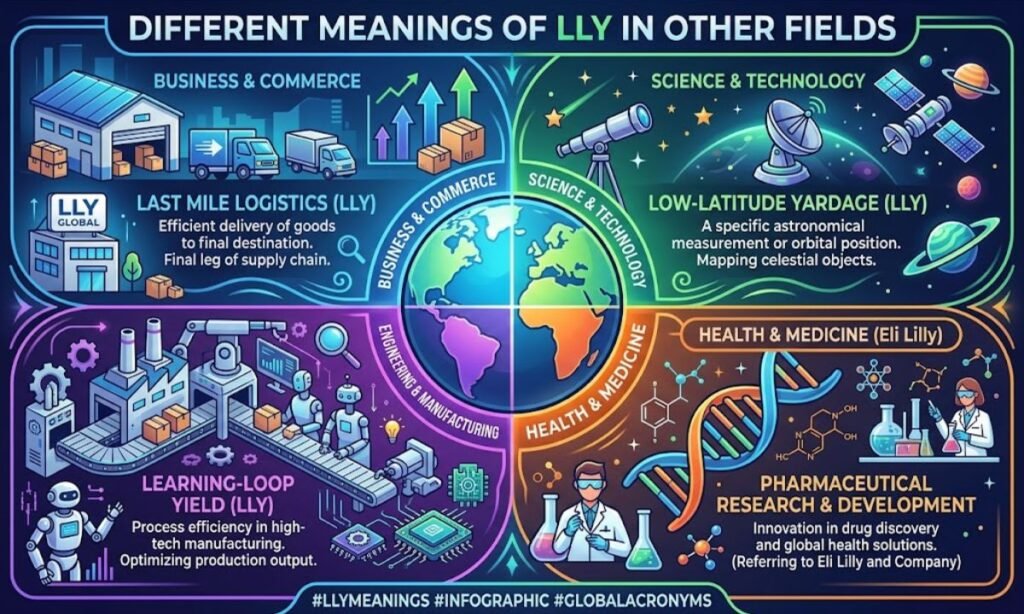
To summarize the various ways LLY can be interpreted depending on the setting:
- Texting & social media: Love You Lots
- Dating context: An affectionate, lower-intensity alternative to “I love you”
- Finance: NYSE ticker for Eli Lilly and Company
- Aviation: Location identifier for a Pennsylvania airport
- Academic/technical: Occasionally used as a non-standard abbreviation or variable label
Context is everything here — the same three letters carry completely different weight depending on whether you’re texting a friend or reading a stock market report.
Common Confusions, Mistakes & Wrong Interpretations
Because LLY looks similar to other popular acronyms, it’s easy to mix up. Here are the most frequent mistakes people make:
- Confusing LLY with LY (“Love You”) — LLY is generally considered a slightly stronger or warmer version.
- Confusing LLY with ILY (“I Love You”) — ILY is more direct and often more serious; LLY feels more casual.
- Assuming it always means something romantic — It’s frequently used platonically between friends and family.
- Mistaking it for “literally” — Some people incorrectly assume LLY is shorthand for “literally,” which isn’t accurate in most texting contexts.
- Overlooking the stock ticker meaning — In business or investing conversations, assuming it’s the slang term instead of Eli Lilly’s ticker can cause confusion.
When in doubt, the surrounding conversation almost always makes the intended meaning clear.
Similar Terms, Alternatives & Related Slang
LLY belongs to a broader family of affectionate texting acronyms. Here’s how it compares:
| Acronym | Meaning | Intensity |
| LY | Love You | Casual, light |
| LLY | Love You Lots | Warm, moderate |
| ILY | I Love You | Direct, sincere |
| ILYSM | I Love You So Much | Strong, emphatic |
| TLY | Truly Love You | Sincere, emotional |
| LYSM | Love You So Much | Strong, affectionate |
LLY sits comfortably in the middle of this spectrum — more affectionate than a plain “LY,” but not quite as heavy as “ILY” or “ILYSM.”
When Should You Use LLY in a Text?
LLY works best in relationships where some level of closeness or familiarity already exists. Good times to use it include:
- Wrapping up a conversation with a close friend
- Responding warmly to a partner’s message
- Supporting someone who shared good or difficult news
- Signing off on a social media comment or DM to someone you’re close with
It’s generally not recommended for:
- Professional emails or workplace messaging
- Conversations with someone you’ve just met
- Formal or official communication
Using LLY too early with someone you don’t know well can come across as overly familiar, so it’s best reserved for people you already share some warmth with.
How to Reply When Someone Says LLY
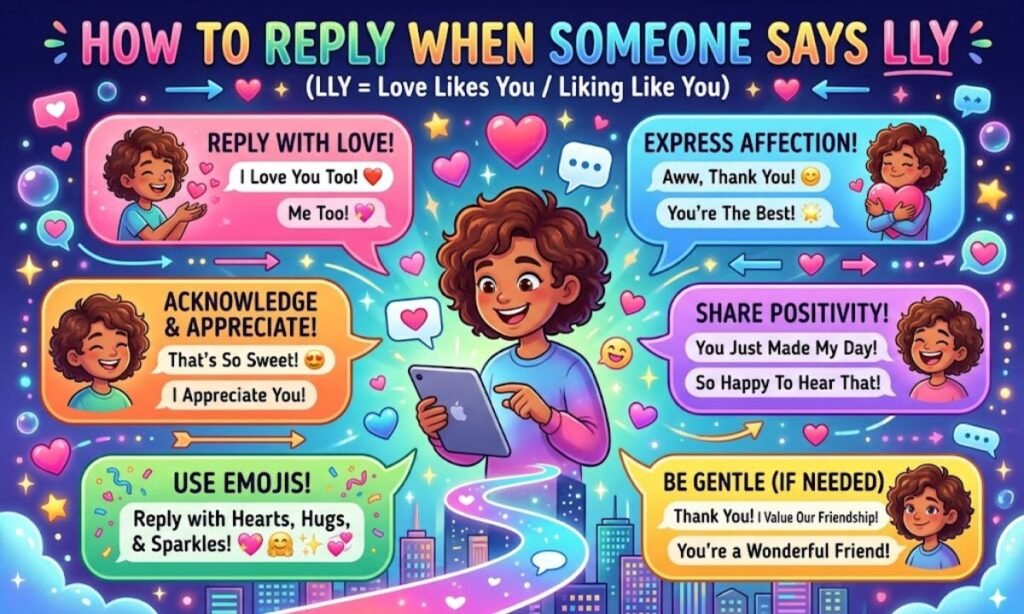
Not sure how to respond when someone sends you LLY? Here are a few natural options:
- Mirror it back — “LLY too! 💕”
- Write it out — “Love you lots too!”
- Use a related acronym — “ly!” or “ily 😊”
- Add a personal touch — “Aww, LLY! You always know how to make my day.”
The safest approach is to match the tone and energy of the original message. If it feels natural and the relationship supports it, reciprocating with a similar acronym keeps the exchange light and genuine.
Is LLY Still Popular? Trends & Online Usage
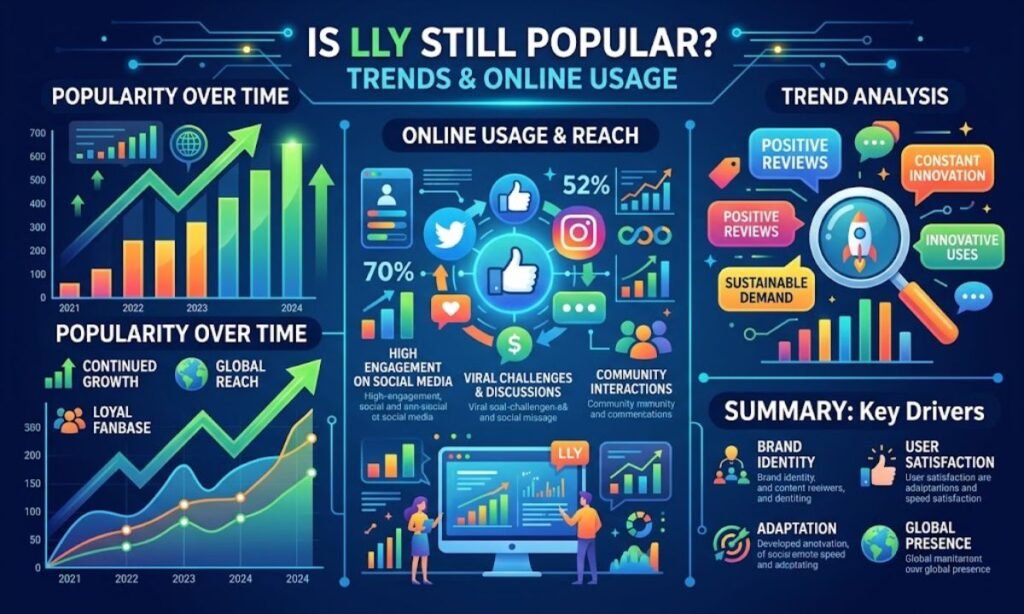
LLY remains a commonly used piece of digital shorthand, particularly among younger users on platforms like Snapchat, TikTok, and Instagram. While newer slang terms are constantly emerging, LLY has stayed relevant because it fills a specific gap — offering a middle ground between overly casual and overly intense expressions of affection.
Its consistency across platforms is part of what keeps it in circulation: whether it’s used in a Snapchat streak caption or an Instagram comment, the meaning stays the same, which makes it easy for people to recognize and use without confusion.
Conclusion
LLY is a simple but versatile piece of internet shorthand. In everyday texting and social media, it almost always means “Love You Lots” — a warm, casual way to express affection between friends, family, or partners. Outside of texting, though, the same three letters take on very different meanings, from Eli Lilly’s stock ticker on the NYSE to an airport location identifier in aviation.
Understanding the context you’re in is the key to using — and interpreting — LLY correctly. Whether you’re replying to a sweet text from a friend or reading a financial news headline, knowing which “LLY” you’re dealing with makes all the difference.
Frequently Asked Questions
What does LLY mean from a boy?
It typically carries the same meaning as from anyone else — “Love You Lots.” The emotional weight depends on the relationship and context rather than the sender’s gender.
Is LLY more serious than ILY?
No, LLY is generally considered more casual and lighter than “I Love You” (ILY), which tends to be more direct and emotionally weighty.
Can LLY be used platonically?
Yes, LLY is commonly used between friends and family members without any romantic meaning at all.
What does LLY mean on Snapchat specifically?
On Snapchat, LLY carries the same meaning as elsewhere — “Love You Lots” — often used as a caption or chat sign-off.

About MeaningsRoot.com
At MeaningsRoot, we make words easy to understand. Our mission is to explain meanings, slang, phrases, and language concepts in simple, accurate, and reader-friendly articles that help you learn with confidence.