
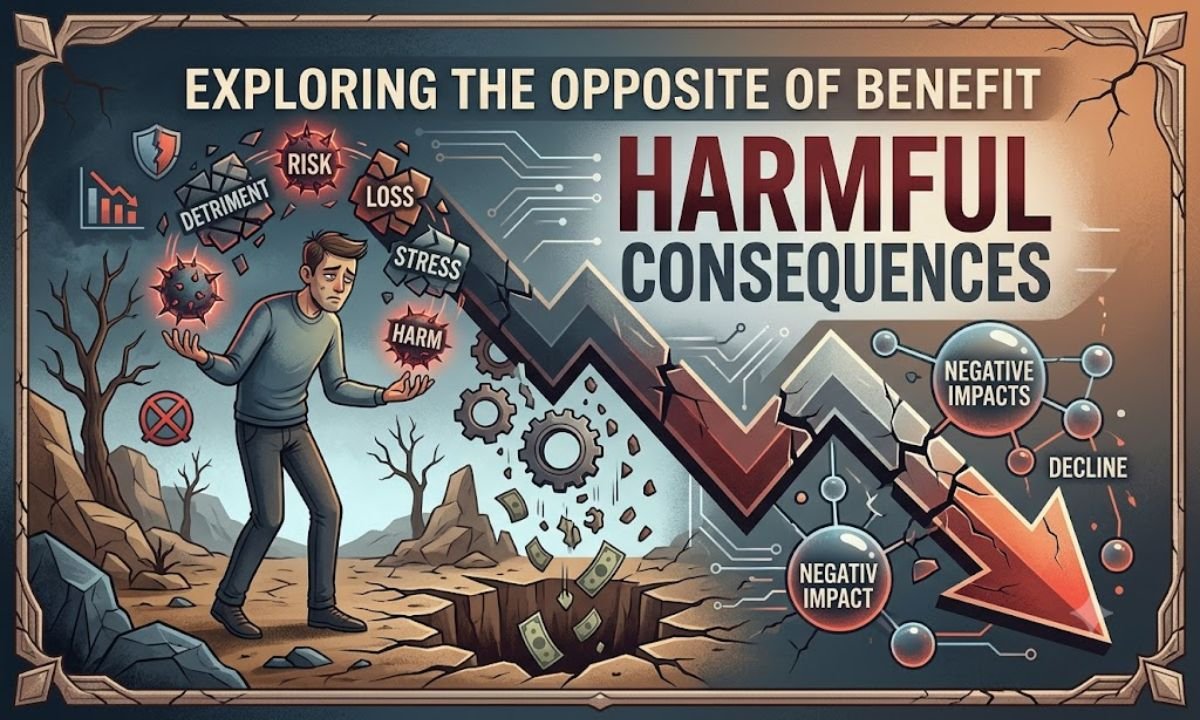

When you’re writing, speaking, or just trying to expand your vocabulary, knowing a word’s opposite is just as useful as knowing the word itself. “Benefit” is one of those everyday words we use constantly — in health, business, relationships, and casual conversation. But what happens when you need to describe the other side of a benefit? That’s where antonyms like harm, disadvantage, loss, and drawback come in.
This guide breaks down everything you need to know about the opposite of benefit — its meaning, common antonyms, real sentence examples, and how to use each one correctly.
What Does Benefit Mean?
Before looking at opposites, it helps to nail down the original meaning. Benefit refers to an advantage, gain, or positive outcome that improves a situation or adds value to someone’s life.
- As a noun: “The new policy offers several benefits to employees.”
- As a verb: “Regular exercise benefits your overall health.”
Benefits can be physical, emotional, financial, or social. They’re something helpful, valuable, or advantageous — the positive result of an action, decision, or product.
What Is the Opposite of Benefit?
The opposite of benefit is any word that describes a negative outcome, disadvantage, or harmful effect instead of a positive one. In simple terms, if a benefit helps, its opposite hurts, hinders, or costs.
The most common opposites of benefit include:
- Harm
- Disadvantage
- Loss
- Drawback
- Detriment
- Damage
- Downside
- Cost (in business contexts)
- Risk (in medical or financial contexts)
Each of these words carries a slightly different shade of meaning, which is why context matters when choosing the right one.
Common Opposites of Benefit
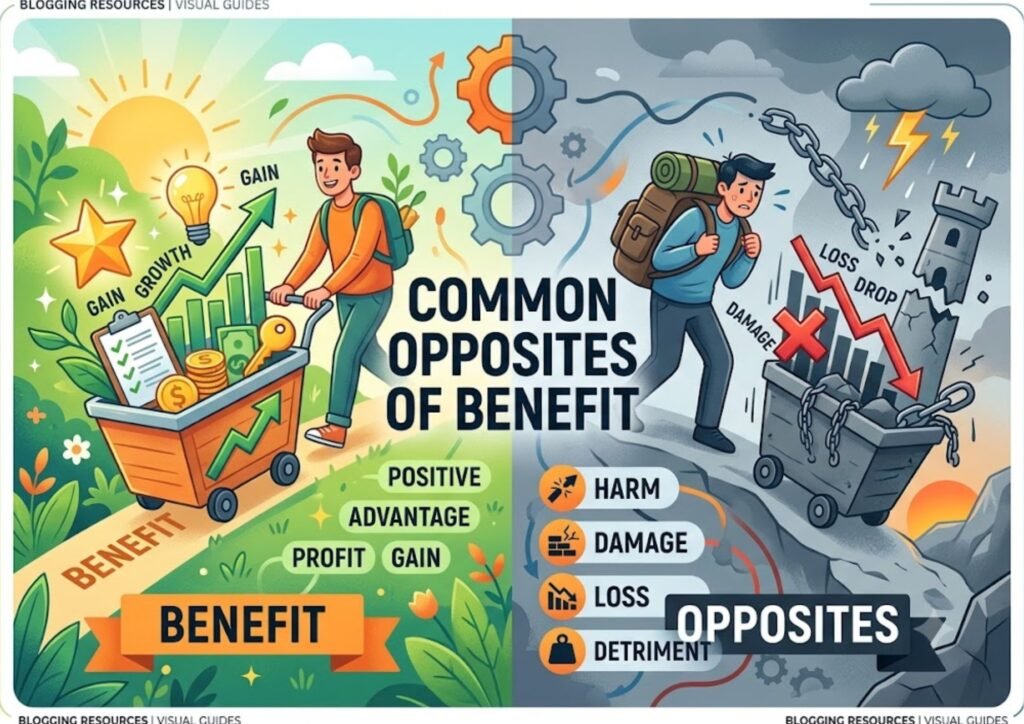
Here’s a quick-reference table showing the most widely used antonyms of benefit, along with their core meaning and typical usage.
| Antonym | Meaning | Typical Use Case |
| Harm | Physical or emotional damage | Health, relationships, safety |
| Disadvantage | A hindrance that puts someone at a lower position | Comparisons, decision-making |
| Loss | Something taken away or forfeited | Business, finance, personal |
| Drawback | An undesirable feature of something otherwise good | Products, plans, decisions |
| Detriment | A negative impact or cause of damage | Formal or academic writing |
| Damage | Physical or structural harm | Property, equipment, health |
| Downside | The negative aspect of a situation | Casual and business conversation |
| Cost | The price or trade-off of an action | Business, economics |
| Risk | Potential for a negative outcome | Medicine, investing |
Difference Between Benefit and Harm
Harm is the most direct and commonly cited opposite of benefit. While a benefit improves a situation, harm damages or injures it — physically, emotionally, or otherwise.
- Benefit: “Meditation benefits mental clarity.”
- Harm: “Excessive stress harms mental clarity.”
Harm tends to be used when talking about direct, often serious, negative consequences — especially involving health, safety, or wellbeing.
Benefit vs Disadvantage
Disadvantage is a softer, more neutral opposite. It doesn’t always imply damage — just that something puts you at a less favorable position compared to an alternative.
- Benefit: “Working remotely offers flexibility.”
- Disadvantage: “Working remotely has the disadvantage of less face-to-face collaboration.”
Disadvantage is commonly used in comparisons, pros-and-cons lists, and evaluations.
Benefit vs Loss
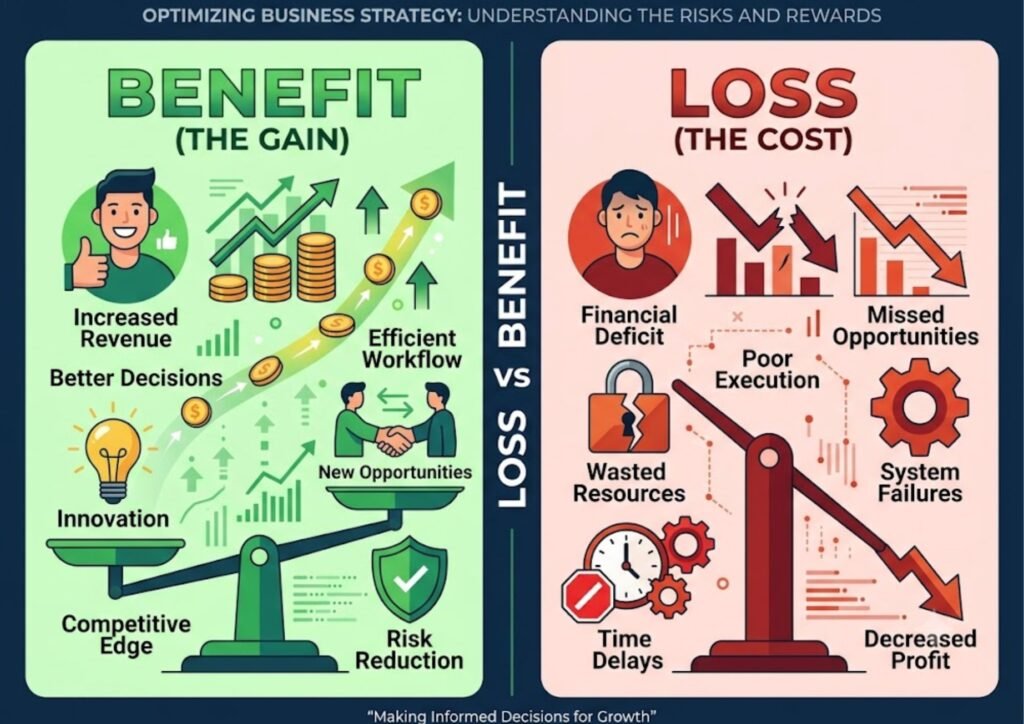
Loss refers to something valuable being taken away or forfeited, rather than gained. It’s frequently used in financial and business contexts.
- Benefit: “The merger brought significant benefits to shareholders.”
- Loss: “The company reported a loss in the third quarter.”
Where benefit implies gain, loss implies deprivation or reduction in value.
Benefit vs Damage
Damage typically refers to physical or structural harm rather than abstract or emotional harm.
- Benefit: “The renovation benefits the property’s resale value.”
- Damage: “Water damage lowered the property’s resale value.”
Damage is more concrete and tangible compared to broader terms like harm or detriment.
Examples of Opposite of Benefit in Sentences
Seeing antonyms used in real sentences makes them easier to remember and apply correctly:
- Smoking causes long-term harm to the lungs.
- Missing the deadline put the team at a serious disadvantage.
- The investor suffered a major financial loss.
- One drawback of the new software is its steep learning curve.
- Poor sleep is a detriment to productivity.
- The storm caused extensive damage to the coastline.
- Every plan has a downside, even the best ones.
- The cost of expansion outweighed the projected benefits.
Synonyms of Benefit
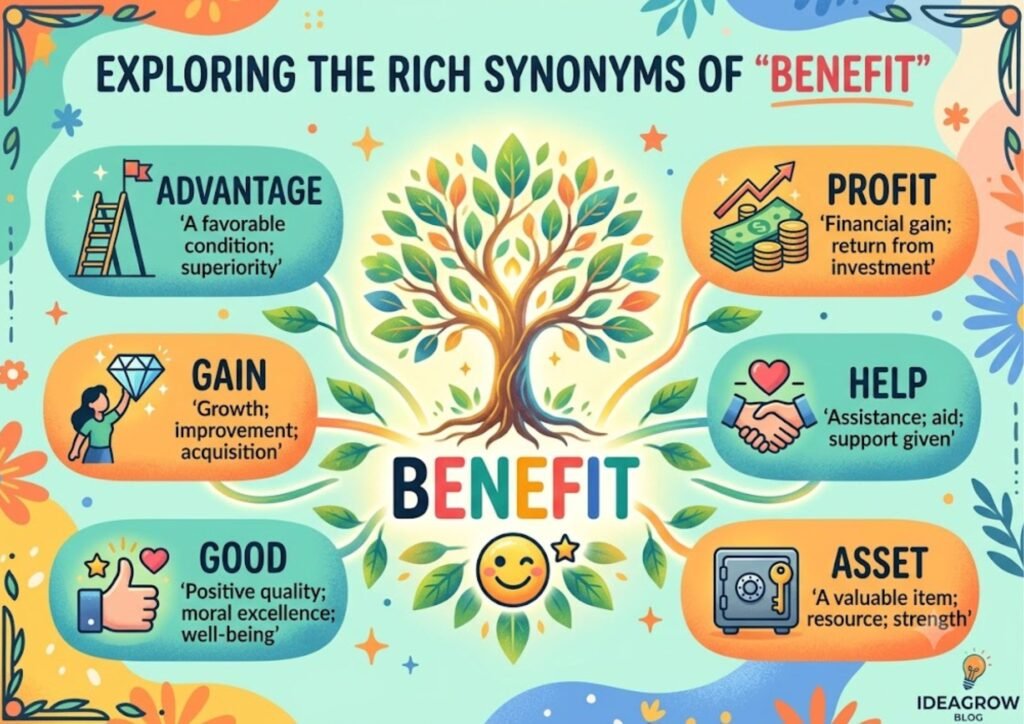
Understanding synonyms of benefit helps highlight just how strong the contrast is when you switch to an antonym.
Words similar to Benefit
Advantage, gain, profit, boon, asset, perk, merit, reward, plus, blessing, help, aid, improvement.
Disadvantage (as a near-synonym of the antonym group)
Drawback, hindrance, downside, obstacle, setback.
Harm (as a near-synonym of the antonym group)
Injury, damage, hurt, detriment, impairment.
Example Sentences with Benefit
- “Employees appreciate the health benefits offered by the company.”
- “It would benefit you to arrive early for the interview.”
- “There’s a real benefit to learning a second language.”
Why Learning Opposites Improves Vocabulary
Studying antonyms isn’t just an academic exercise — it sharpens how clearly and precisely you communicate. Here’s why it matters:
- Improves writing clarity: Choosing the exact opposite word avoids vague or repetitive phrasing.
- Strengthens critical thinking: Weighing benefits against drawbacks supports better decision-making.
- Boosts exam performance: Antonym questions are common in English proficiency tests like IELTS, TOEFL, and SAT.
- Enhances everyday communication: Knowing precise opposites makes conversations, arguments, and explanations more effective.
Opposite of Benefits in Business
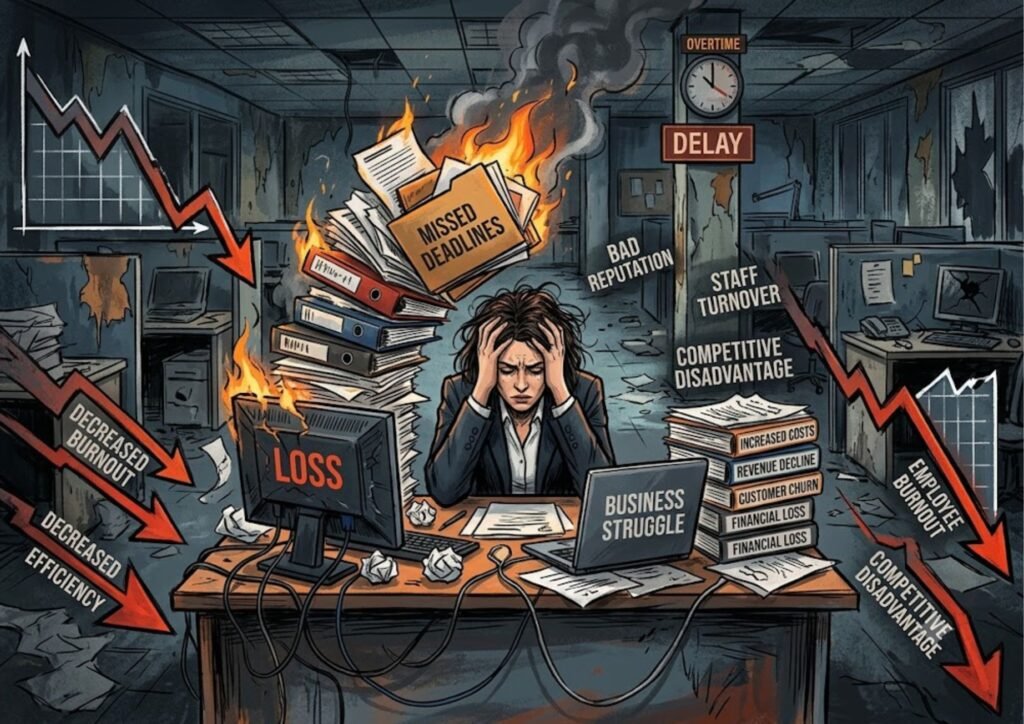
In a business context, the opposite of benefit often shows up as cost or liability. Companies routinely run cost-benefit analyses, weighing what they gain against what they spend or risk.
- “The cost of the new equipment outweighed its benefits.”
- “Rising liabilities became a serious concern for the firm.”
In medical or scientific writing, the word risk frequently plays the role of benefit’s opposite — as in a risk-benefit analysis for a treatment or procedure.
Opposite of Benefit in Everyday Conversations
In casual speech, people often reach for simpler, more relatable opposites like:
- “That’s a real downside.”
- “Honestly, it did more harm than good.”
- “There’s a catch to this deal.”
- “It’s not worth it — too many drawbacks.”
These informal terms carry the same core meaning as their more formal counterparts but fit naturally into everyday dialogue.
How to Choose the Correct Opposite
Not all antonyms of benefit are interchangeable. Use this simple guide to pick the right one:
| If you’re talking about… | Use this antonym |
| Health or emotional impact | Harm |
| Comparisons or trade-offs | Disadvantage |
| Something lost or forfeited | Loss |
| A flaw in an otherwise good thing | Drawback |
| Formal or academic writing | Detriment |
| Physical or structural impact | Damage |
| Business or financial trade-offs | Cost |
| Medical or investment uncertainty | Risk |
Common Mistakes When Using Opposites of Benefit
- Using “damage” for abstract situations: Damage is best for physical or tangible harm, not emotional or financial contexts.
- Confusing “loss” with “disadvantage”: Loss implies something was taken away; disadvantage implies a weaker position, not necessarily a loss.
- Overusing “harm” in formal writing: In academic or professional writing, “detriment” often reads more precisely than “harm.”
- Ignoring context in business writing: In cost-benefit discussions, “cost” is usually more accurate than “harm” or “damage.”
Importance of Understanding Opposites
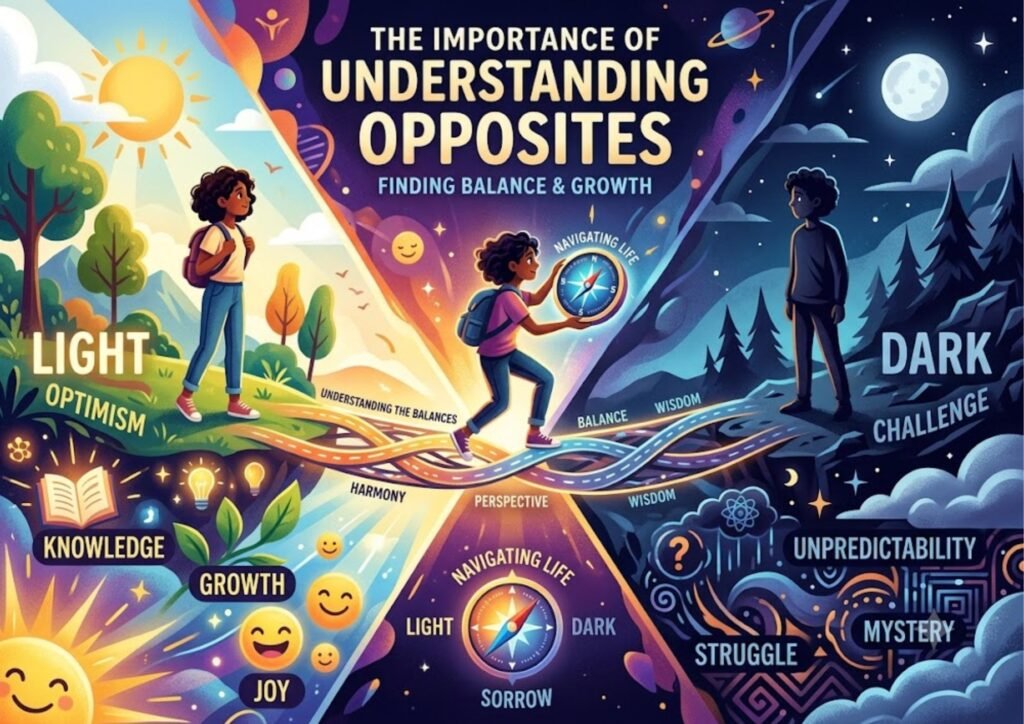
Grasping both a word and its opposite gives you a fuller command of the language. It allows you to:
- Present balanced arguments (pros and cons)
- Write persuasive or analytical content
- Communicate risks clearly in professional settings
- Build stronger vocabulary for exams and everyday use
Final Words
The opposite of benefit isn’t a single word — it’s a group of related terms, each suited to different situations. Whether you choose harm, disadvantage, loss, drawback, detriment, or damage depends on the context: health, business, emotions, or everyday conversation. Mastering these distinctions helps you write and speak with more precision, clarity, and confidence.
Frequently Asked Questions
What is the main opposite of benefit?
The most common and direct opposite of benefit is harm, though disadvantage, loss, and drawback are also widely used depending on context.
Is disadvantage the same as harm?
Not exactly. Disadvantage refers to a weaker position or hindrance, while harm implies actual damage or injury.
What is the opposite of benefit in business?
In business, the opposite of benefit is usually cost or liability, especially in cost-benefit analysis.
Can “loss” be used as an opposite of benefit?
Yes. Loss works well when benefit refers to a gain, since loss represents something taken away or forfeited.
What’s the opposite of benefit as a verb?
As a verb, the opposite of “benefit” can be “harm,” “damage,” or “hurt,” depending on the sentence.
Is “risk” an antonym of benefit?
In medical and financial contexts, yes — risk represents the potential negative outcome weighed against a benefit.
Why is it important to learn antonyms like this?
Learning antonyms strengthens vocabulary, improves writing clarity, and supports better decision-making by highlighting both sides of a situation.

About MeaningsRoot.com
At MeaningsRoot, we make words easy to understand. Our mission is to explain meanings, slang, phrases, and language concepts in simple, accurate, and reader-friendly articles that help you learn with confidence.